
The moment you’ve been waiting for – curious about your newborn baby’s bright yellow poop and its unique aroma? Let’s explore together what constitutes a healthy and normal poop for your baby. We’ll delve into aspects like colour, consistency, frequency, and when it’s advisable to consult your GP for medical guidance.
A comprehensive guide to your baby’s poop
Baby poop is a valuable indicator of your baby’s overall well-being, so it’s crucial to keep a watchful eye on it (not that it’s difficult to miss).
What should the first poop look like?
Initially, your newborn’s first poop may appear very dark, nearly black in colour. It will have a sticky texture and strong odour – this substance is called meconium, consisting of remnants from your baby’s time in the womb. Within 1-2 days, the poop should lighten in colour and become more liquid. Pay attention – if it doesn’t, consult your doctor, as nutritional issues might be at play.
How often should my newborn poop?
During their first month of life, you can anticipate multiple bowel movements per day, sometimes even after each feeding. The frequency of pooping differs between breastfed and formula-fed babies, with the latter having more frequent bowel movements. Breastfed babies might go without pooping for days, which isn’t a concern unless they appear uncomfortable or their abdomen becomes very rigid.
What’s the nature of my baby’s poop if I breastfeed?
While breastfeeding, expect your newborn’s poops to:
- Be soft and runny in consistency.
- Sport a lighter hue.
- Exude a sweet aroma.
How frequently will my breastfed baby poop?
- During the initial week, your baby might poop up to four times daily, tapering to every feed over the next 2-3 weeks.
- Between 3 and 6 weeks, your baby’s bowel movements will stabilize, possibly resulting in one poop a day or even skipping days.
What will my baby’s poop look like if I’m using formula?
If you’re feeding your baby formula, their poop will differ from that of a breastfed baby. Look out for:
- A firmer texture, resembling peanut butter.
- A darker hue, ranging from yellow to brown.
- A more distinct odour.
How often will my formula-fed baby poop?
- In the early weeks, your newborn may poop multiple times a day.
- Beyond 4 weeks, expect one daily poop if your baby is formula-fed.
Which poop colour is considered normal?
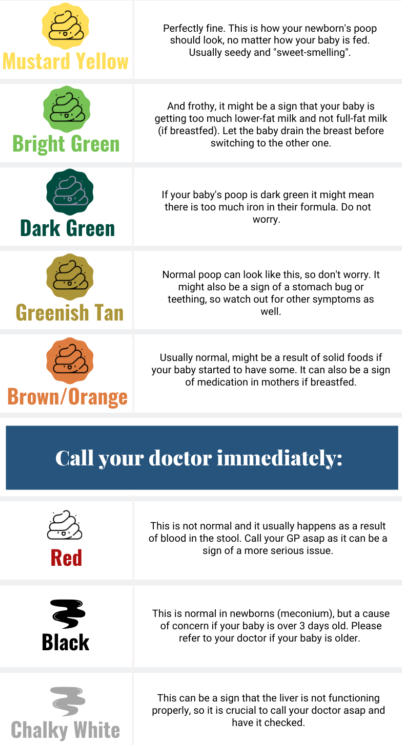
Doctors often assess the colour of your baby’s poop to gauge their health. We’ve prepared an infographic outlining normal poop colours, so you can be vigilant for any deviations. Promptly contact your doctor/GP if you notice red, black, or white poop.
- Mustard yellow poop – Absolutely normal. This is the expected appearance of your baby’s poop, regardless of the feeding method. Typically, it’s grainy and carries a “sweet” scent.
- Bright green poop – If frothy, it could indicate excessive intake of lower-fat milk. Ensure the baby drains one breast before switching.
- Dark green poop – This might indicate excessive iron intake from the formula. Don’t fret.
- Greenish tan poop – Common poop variation, but also linked to stomach bugs or teething. Watch for additional symptoms.
- Brown/orange poop – Generally normal, possibly influenced by solid foods introduction or maternal medications if breastfeeding.
- Red poop – Not normal; it may indicate blood in the stool. Contact your GP promptly, as it could indicate a serious issue.
- Black poop – Normal in newborns (meconium), but concerning if your baby is over 3 days old. Consult your doctor in this case.
- Chalky white poop – This might signal compromised liver function. It’s vital to promptly consult your doctor for an assessment.