

Understanding Your Baby’s Head Shape
As a new mother, you’re embarking on an incredible journey of love and care for your precious little one. One aspect that might be on your mind is your baby’s head shape. You may have heard that babies are born with soft skulls that can be gently moulded. This means that factors like lying on their back, sitting in bouncers, or their position in the womb can influence the shape of their head. It’s important to note that the flat head syndrome, which includes conditions like plagiocephaly and brachycephaly, is not a sign of neglect; it’s a common occurrence that many parents encounter.
What are plagiocephaly and brachycephaly?
Plagiocephaly, which means “oblique head,” can result in a flattened appearance on one side, leading to asymmetry. Your baby’s ears might appear misaligned, and the head shape might seem parallelogram-like from above. On the other hand, brachycephaly involves flattening the back of the head, causing it to widen.
These conditions can be worrisome at first glance, but it’s important to remember that they are primarily cosmetic and typically do not affect brain development. Another flat head condition, brachycephaly, happens when the back of the head becomes flattened which causes the head to widen. Sometimes, the forehead will bulge out.
Causes and prevention
Several factors can contribute to your baby developing a flat head, including spending extended periods lying on their back to reduce the risk of Sudden Infant Death Syndrome (SIDS), premature birth, complications in the womb, and more. If you find yourself worried about your baby’s head shape, it’s a great idea to take a proactive approach.
To help prevent or address flat head syndrome, consider these steps:
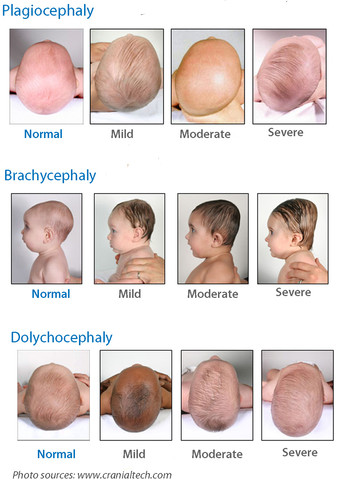
- Supervised Tummy Time: While babies may not always be enthusiastic about tummy time, it’s crucial for their development. Engage in this practice a few times each day under your watchful eye.
- Reduce Time in Restrictive Seats: Limit the time your baby spends in car seats, prams, and bouncers. Opt for slings or carriers instead to encourage natural movement.
- Rotate Toys and Feeding Positions: If you notice a preference for one side, encourage balance by switching toys and alternating feeding positions.
- Vary Sleep Positions: While putting your baby to sleep on their back is crucial to reducing SIDS risk, you can gently turn their head from side to side within the crib.
- Change Crib Orientation: Each week, change the direction your baby’s head faces in the crib to encourage them to turn their head in different directions.
- Mindful Repositioning: Throughout the day, gently reposition your baby’s head to ensure even pressure distribution.
When to Seek Professional Guidance
In most instances, your baby’s head shape will improve naturally over time, especially with your diligent care. However, if you’re concerned and haven’t seen improvement by around 6 months of age, seeking advice from a healthcare professional is a wise step. Remember, your baby’s well-being is always worth ensuring.
Comfort and Care Products
While there are products like plagiocephaly pillows available on the market, it’s important to approach their use with caution. Some discussions suggest potential risks, including an increased risk of SIDS. If you decide to use such products, always keep a watchful eye on your baby and ensure their safety.
Personal Experience and Recommendations
We understand that the journey of caring for your baby can be filled with questions and concerns. Just like you, many parents have walked this path, including us here at Mothernity. If you’re curious about products that may aid your baby’s comfort, two options are worth considering:
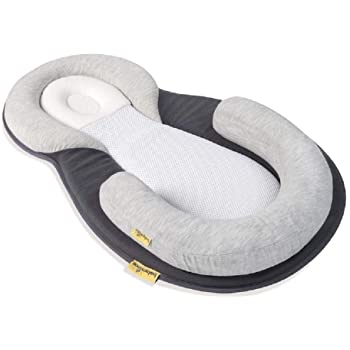
Babymoov Cosydream: This product comes equipped with an integrated cushion designed to support your baby’s head shape while providing optimal comfort. It can be used until your baby learns to roll over, typically around 4 to 6 months. Its modular positioning roller ensures, on the other hand, ideal back support and raises the baby’s legs for better digestion. Its very soft and micro-breathable materials guarantee the infant’s optimal comfort.
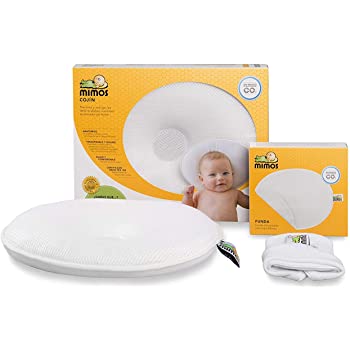
Mimos Pillow: This pillow is designed to prevent and correct flat head syndrome. Pediatric doctors and neurosurgeons have recommended it for its effectiveness when introduced before 6 months of age.
While the corrective positioning of your baby may work well up to the age of 3 months; after this age, it can become very difficult to alter your baby’s sleeping position. MIMOS pillow eases the pressure on your baby’s head and has been shown to get great results, particularly when introduced before 6 months of age. The pillow is a European CE-approved Class-I medical device recommended by paediatric doctors and neurosurgeons worldwide.
Remember, every baby’s journey is unique, and your intuition as a mother is invaluable. You’re creating a nurturing and loving environment for your little one, and that’s what truly matters. While the flat head syndrome might appear concerning, it’s important to approach it with the right knowledge.